21 Jul 2025
Gold, Critical Minerals, and the China Reset: Why WAF, Kingsgate, and GWR Matter Now
As China redefines its growth model, Australian investors are facing one of the most pivotal shifts in decades. The property-fuelled commodity boom is over. But a new era of strategic metals, supply chain realignment, and industrial policy is taking shape. In our latest deep-dive, we unpack what this transformation means for local equities and highlight the ASX-listed names best positioned to thrive, including Rand Mining, West African Resources, Catalyst Metals, Kingsgate, GWR Group, Indiana Resources, and Perenti.
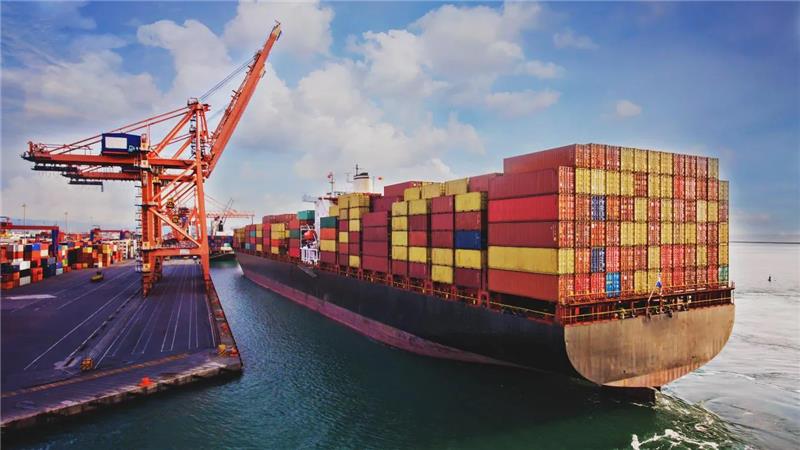
As China undergoes one of the most consequential transformations in its modern economic history, Australian resource and industrial equities find themselves at a major turning point. Gone are the days when China’s commodity demand moved in one direction, up. What we now face is a more complex, two-speed story: a deep structural slowdown in property and construction, counterbalanced by a deliberate policy push into strategic, high-tech industries. For Australia, this shift carries both risks and rewards, and investors need to be selective.
Slower Growth Isn’t Temporary, It’s the New Normal for China
China’s post-pandemic growth path is no longer a rebound story. Instead, what’s unfolding is a long-term deceleration. Major forecasters expect GDP growth to slow to 4.0% in 2025 and dip closer to 3.0% in 2026. While Beijing still has room to stimulate, it’s choosing not to chase top-line growth at any cost. This is a managed slowdown, shaped by long-standing structural imbalances, chief among them a shrinking property sector and aging demographics, as well as renewed external headwinds, particularly tariffs from the U.S.
Beijing’s recent stimulus reflects this shift in priorities. The focus is squarely on advanced manufacturing, clean energy, and digital infrastructure. While these sectors are seeing targeted support and solid output growth, they can’t offset the broader softness in domestic demand. Deflationary trends have returned, with consumer prices flatlining and industrial overcapacity weighing on margins across the board.
China’s Real Estate Market Is No Longer the Engine of Growth
No sector better illustrates China’s changing economy than property. Once responsible for as much as a quarter of national GDP, the real estate sector has entered a multi-year correction. Sales are falling, prices are dropping, and government support measures have so far struggled to gain traction. Inventories of unsold homes continue to build, with little sign of a sustained turnaround.
This shift is critical for Australian investors. Iron ore, coking coal, and other materials linked to Chinese construction booms are facing a new reality, one in which the structural demand from property is in permanent decline. While some infrastructure investment remains, it is nowhere near sufficient to fill the gap left by residential construction.
A Geopolitical Standoff That’s Becoming the New Baseline
The economic backdrop is being further complicated by deepening strategic competition between China and the United States. What began as a trade spat has evolved into a long-term geopolitical standoff involving tariffs, technology restrictions, and military posturing. As of mid-2025, U.S. tariffs on Chinese goods average more than 50%, and there are growing expectations that a second Trump administration could raise them even further.
China has responded by doubling down on self-sufficiency and retaliating with export controls, particularly on critical minerals. The result is a fragmented global trading system where access to raw materials has become a national security concern. For Western allies, this has triggered a rush to build secure, alternative supply chains, placing a renewed spotlight on Australia as a reliable supplier of strategic commodities.
From Bulk Commodities to Strategic Metals: Australia’s Role Is Evolving
Amidst all this change, Australia finds itself in a unique position. As China pushes ahead with its industrial policy agenda, and the West seeks to decouple from Chinese supply chains, both sides are demanding the same core materials: lithium, copper, rare earths, and other critical minerals. These are the building blocks of electric vehicles, clean energy infrastructure, advanced electronics, and defence systems.
At the same time, materials tied to China’s old growth model—such as iron ore—face a more challenged outlook. It’s no longer a one-way bet. Investors need to separate the structural winners from the legacy plays that may struggle to adapt.
What This Means for Investors: Focus on the Right Kind of Exposure
The big picture is clear: we’re moving into a more complex, divided commodity market. The days of a blanket rally in resource stocks are behind us. Going forward, returns will be shaped by whether a company is exposed to the right part of China’s evolving growth engine, and whether it fits into the West’s drive to build strategic resilience.
Now, we’ll take a closer look at the ASX-listed names that are best positioned to thrive in this new environment, companies with exposure to high-demand strategic materials, supported by policy tailwinds from both East and West. These are the names we believe deserve attention heading into FY26.
The current environment of elevated geopolitical risk and strong central bank demand provides a powerful tailwind for gold producers. For Australian companies, a high AUD gold price translates into exceptional operating margins, driving strong cash flows and shareholder returns. The following companies represent a spectrum of investment opportunities within the gold sector, from established, dividend-paying producers to high-growth developers on the cusp of a major re-rating.
Source: Investor Pulse, Research (2025) [2]
Rand Mining Limited (ASX: RND)
Source: RND, weekly chart (2025)
Rand Mining Limited offers what we view as a clean and compelling investment proposition: high-yield exposure to the Australian dollar gold price with minimal operational complexity. The company’s key asset is its 12.25% participating interest in the East Kundana Joint Venture (EKJV), a producing gold project in Western Australia. With no direct operating role, Rand maintains a streamlined corporate structure that keeps overheads low and allows profits to flow efficiently to shareholders.
For the first half of FY25, ending 31 December 2024, Rand delivered a strong financial performance. Net profit after tax rose to $8.13 million, up from $5.90 million in the previous corresponding period, translating to earnings of 14.3 cents per share. Reflecting its commitment to shareholder returns, the company paid a fully franked dividend of 10 cents per share in December, in line with its consistent payout policy. This equates to a dividend yield that has remained above 5%, offering investors a tangible and attractive return.
The company’s financial position remains solid, with $14.46 million in net operating cash flow for the half-year. While Rand does not issue explicit forward guidance, given that earnings are tied to the performance of the EKJV and the gold price, it has extended its on-market share buy-back through January 2026, providing an additional lever for capital returns and share price support.
We view Rand as a simple, high-yield exposure to gold, well suited to income-focused investors with a constructive view on the metal. The company’s passive joint venture model enables consistent, fully franked dividends with limited risk from operational volatility. The strong yield helps establish a valuation floor, while any appreciation in gold prices offers direct upside. In our view, the investment case is clear: Rand Mining delivers one of the most reliable income streams in the junior gold space, with additional support from a disciplined capital management program.
West African Resources Limited (ASX: WAF)
Source: WAF, weekly chart (2025)
West African Resources is one of the most compelling growth stories in the gold sector today. We're seeing the company transition from a single-mine operator into a multi-asset, mid-tier producer, an inflection point that’s poised to reshape its market profile. At the centre of this transformation are its Sanbrado operations and the newly commissioned Kiaka Gold Project, both located in Burkina Faso. Kiaka is a large-scale, long-life asset that’s coming online ahead of schedule, and it’s set to materially lift production while reducing overall costs.
The June quarter of FY25 marked a turning point. WAF delivered its first gold pour at Kiaka, early, and reported 45,611 ounces produced and 49,840 ounces sold at a strong average price of US$3,282 per ounce. For the full year, the company is tracking well against guidance, with expectations of 190,000 to 210,000 ounces from Sanbrado and another 100,000 to 150,000 ounces from Kiaka as it ramps up. This gives us a group production range of 290,000 to 360,000 ounces for FY25.
Looking ahead to FY26, WAF enters a new chapter. That will be the first full year of commercial production at Kiaka, and we’re expecting annual output to exceed 400,000 ounces. The company’s longer-term vision is even more ambitious, targeting sustainable production of over 500,000 ounces per year and a 10-year production base of 4 million ounces. What makes this particularly attractive is that the growth is fully funded, and the high gold price environment is a tailwind for free cash flow.
We believe the market hasn’t yet priced in the scale of this transformation. The Kiaka milestone significantly de-risks the investment case and sets the stage for a re-rating as WAF becomes a true mid-tier producer. With rising output, declining costs, and robust commodity pricing, we see strong momentum in earnings and cash generation. For investors looking for high-growth exposure in the gold space, WAF offers a rare combination of timing, scale, and operational clarity. It's a de-risked entry into a company that’s now entering its next phase of value creation.
Catalyst Metals Limited (ASX: CYL)
Source: CYL, weekly chart (2025)
Catalyst Metals has really come into its own as a turnaround and growth story in the Australian gold sector. After acquiring Vango Mining and Superior Gold in 2023, we saw the company consolidate the Plutonic Gold Belt in Western Australia and rapidly execute a strong operational turnaround at both the Plutonic and Henty gold mines. These assets have now become a stable, cash-generating foundation, setting the stage for a smart, low-capital organic growth strategy.
The 2024 financial year marked a clear inflection point. Catalyst delivered total gold production of 109,785 ounces, 84,823 ounces from the revitalized Plutonic mine and 24,962 ounces from Henty. That performance translated into a maiden annual profit of $24 million and $71 million in operating cash flow. With that, Catalyst repaid $26 million in debt and still finished the year with $38 million in cash and bullion. The guidance for FY25 is steady, with production expected to remain between 105,000 and 120,000 ounces at an AISC of A$2,300 to A$2,500 per ounce.
Looking ahead, we see a fully funded three-year roadmap to lift production to 200,000 ounces annually. What makes this particularly attractive is the capital-light approach. Rather than betting on a major new build or speculative exploration, Catalyst is focusing on four nearby satellite deposits, Trident, Plutonic East, and K2 among them, to provide feedstock to the existing Plutonic processing facility. It’s a practical, efficient way to scale up using infrastructure that’s already in place, with the capital spend capped at just A$31 million.
From an investment perspective, this story is highly compelling. Catalyst has already proven its ability to turn around underperforming assets and generate meaningful cash flow. Now it’s entering a growth phase with low risk and high returns, all funded internally. That’s rare. The market hasn't yet fully recognized the value in this transformation. With a clear path to double production, a cost-effective growth strategy, and a proven management team, we believe Catalyst is on track to become a mid-tier Australian gold producer. The re-rating opportunity is real, and we see significant upside from here.
Kingsgate Consolidated Limited (ASX: KCN)
Source: KCN, weekly chart (2025)
Kingsgate Consolidated is shaping up to be a classic re-rating story, built around the successful restart and de-risking of a world-class asset. We see the company’s 100% owned Chatree Gold Mine in central Thailand as the clear driver of value. Chatree was a steady producer for 15 years before being shuttered in 2016 due to political decisions outside the company’s control. With all permitting issues now fully resolved, we believe the market has yet to catch up with the operational turnaround that’s underway.
The first half of FY25 (to 31 December 2024) showed just how far Kingsgate has come. The company produced 33,755 ounces of gold and 297,368 ounces of silver, delivering $136 million in revenue and net profit of $2.45 million. Momentum clearly accelerated into the March 2025 quarter, with gold production up to 20,628 ounces and all-in sustaining costs (AISC) trending lower to US$1,839 per ounce. For the full year, Kingsgate has guided to the lower end of its 80,000–90,000-ounce range, with AISC at the upper end of its US$1,650–1,800 range — typical for the early stages of a restart. Importantly, the balance sheet continues to strengthen, with cash and bullion growing to $59.5 million by March 2025.
Looking ahead, FY26 marks the shift to a stable, cash-generating production profile. The company is guiding for 95,000 to 120,000 ounces of gold annually from FY26 through FY28, with a substantially lower AISC between US$1,400 and US$1,600 per ounce. At current gold prices, this should translate into meaningful free cash flow. Yet despite this clear path to profitability, Kingsgate still trades at a steep discount to mid-tier peers, roughly 0.5x price-to-NAV versus a peer average around 0.8x, suggesting there’s significant upside as the market catches up.
We see Kingsgate as a deeply undervalued asset at a critical inflection point. The market is still pricing it as a developer weighed down by past political risk, while the reality is that it’s fast becoming a reliable, long-life gold producer. The successful ramp-up of Chatree is unlocking the value that was always embedded in the asset, and with major risks now behind it, the focus is firmly on execution. FY25 has already shown a solid trajectory of increasing production and falling costs. As Kingsgate moves into steady-state operations and begins generating consistent free cash flow in FY26, we expect the valuation gap with peers to narrow. This gives investors a window to gain exposure to a high-quality, cash-generating asset before it’s fully recognised by the broader market.
Diversified and Specialty Miners: Strategic Positioning for a New Era
This group of companies offers exposure to a range of commodities and business models, from large-scale steel production to specialized domestic manufacturing and catalyst-driven exploration. Their investment theses are tied to diverse drivers, including the U.S. industrial cycle, Australian domestic construction, and the geopolitical imperative to secure critical mineral supply chains.
Source: Investor Pulse, Research (2025) [3]
GWR Group Limited (ASX: GWR)
Source: GWR, weekly chart (2025)
GWR Group Limited represents a compelling special situation and deep value opportunity. We're looking at a company in strategic transition, moving away from its legacy as a small-scale iron ore producer and now actively redeploying its substantial cash reserves into the high-growth critical minerals sector.
The core of our investment case lies in the striking disconnect between GWR’s market capitalization and the value of its liquid assets. The company’s primary source of income remains a royalty stream from the Wiluna West Iron Ore Project, which brought in $2.53 million to the end of February 2025. While this provides a steady cash inflow, it’s the balance sheet that grabs our attention. As of March 2025, GWR held approximately $39.6 million in cash and another $16.1 million in listed investments, primarily a strategic stake in Tungsten Mining NL, bringing total liquid assets to around $55.7 million. In contrast, the company’s market cap has hovered between just $29 million and $32 million, offering a significant discount to its net asset value.
Looking ahead, management has laid out a clear plan for FY25 and beyond: to leverage this strong financial position and acquire new projects aligned with global geopolitical and energy transition themes. The focus is on commodities such as gold, copper, and critical minerals, resources that are essential for decarbonization and supply chain resilience. Due diligence is underway on several opportunities in tier-one jurisdictions like Western Australia, and GWR is also advancing its own exploration efforts at the Prospect Ridge Magnesite Project in Tasmania. Its existing investment in Tungsten Mining adds exposure to another strategic mineral currently under Chinese export controls.
We see GWR as a unique asset-backed opportunity. The company is trading at a deep discount to its net cash and listed investments, offering investors a meaningful margin of safety. Importantly, the investment thesis doesn’t rest on current operations, but on the potential value creation as management redeploys capital into value-accretive acquisitions in the critical minerals space. In effect, investors are buying GWR’s cash and listed holdings at a discount, while gaining a free option on the upside that could come from strategic project acquisitions. This pivot is well aligned with global structural shifts in commodity demand. The key catalyst will be the announcement of a material acquisition, one that signals GWR’s evolution from a passive balance sheet play to an active developer in a globally strategic sector. For those seeking exposure to critical minerals with limited downside, we believe GWR offers a compelling, catalyst-rich opportunity.
Indiana Resources Limited (ASX: IDA)
Source: IDA, weekly chart (2025)
Indiana Resources Limited offers a compelling special situation opportunity with the kind of near-term catalyst that can redefine a company’s trajectory. We see this as a high-impact investment, driven by an imminent balance sheet transformation that positions Indiana to fully unlock the potential of its highly prospective gold and rare earth element (REE) tenements in South Australia’s Gawler Craton.
At the heart of the thesis is the company’s arbitration settlement with the Tanzanian government. Indiana has now secured a binding agreement and received the bulk of the funds, including the final USD 30 million in April 2025, bringing total receipts to USD 90 million out of a USD 109 million award. The company is set to receive a minimum of USD 62.468 million (approximately A$103 million), an extraordinary windfall relative to its recent market capitalization. Even prior to the final tranche, Indiana reported a cash balance of A$57.6 million as of October 2024.
This capital injection is game-changing. It eliminates any financial overhang and equips the company with the firepower to pursue an aggressive exploration and development strategy well into FY26 and beyond. Indiana’s Gawler Craton landholding is no fringe play—recent work has outlined a 10km by 4.5km area with strong potential for high-grade, clay-hosted REE mineralisation, alongside broad, high-order gold anomalies identified at the Minos project.
In a sign of strength, Indiana announced a $0.05 per share capital return in June 2025, demonstrating its ability to deliver value to shareholders while still retaining more than enough funding for its exploration push.
We view Indiana as a rare opportunity where the company trades at a steep discount to the cash it holds or is contractually due. This is an asset play at its core, with the balance sheet now offering a substantial margin of safety and a clear floor for valuation. But more importantly, the cash provides the fuel to convert a strong land position into real discovery-driven upside. The Gawler Craton is a world-class jurisdiction, and the company’s targets, especially on the REE front, offer leverage to strategic commodity themes. With a newly fortified balance sheet, a clear exploration runway, and multiple shots at a major discovery, we see Indiana as a high-conviction, catalyst-rich investment. The setup is ideal for those seeking asymmetric returns, with downside anchored by a debt-free, cashed-up position and upside driven by exploration success.
Perenti Limited (ASX: PRN)
Source: PRN, weekly chart (2025)
Perenti is a premier ASX-listed global mining services group, and we see it as a standout opportunity within the mining cycle. With operations spanning large-scale surface and underground contract mining, specialized drilling, and emerging technology solutions, the business offers a uniquely diversified service model. Thanks to its scale, deep technical capability, and global footprint, we believe Perenti is exceptionally well-placed to benefit from the strong, multi-year demand cycle driven by both critical minerals and traditional commodities.
Financially, the business is performing exceptionally well. In the first half of FY25 (ending 31 December 2024), Perenti delivered record revenue of $1.73 billion and underlying EBIT(A) of $155 million, testament to the strength and resilience of its operating model. The company has reaffirmed its full-year FY25 guidance, targeting revenue between $3.4 billion and $3.6 billion, and EBIT(A) of $325 million to $345 million, reflecting strong confidence in both execution and outlook.
Looking ahead to FY26 and beyond, we’re particularly encouraged by Perenti’s massive work-in-hand, which has been materially strengthened by a string of major contract wins. These include the A$500 million Agnew contract, the A$1 billion Obuasi contract, and the A$1.1 billion Mana contract, together adding over A$2.6 billion to the order book. Management has been clear: these wins are setting the business up for robust growth over the medium term.
Strategically, Perenti is aligned with two powerful trends: the shift towards deeper, more complex underground mining, and the growing opportunity in North America’s large and stable hard rock mining sector. These aren’t just tailwinds, they’re areas where Perenti brings real competitive advantage. Its underground expertise is globally recognized, and its expanding North American footprint gives it exposure to one of the most attractive mining markets in the world.
From an investment perspective, we see Perenti as a compelling, leveraged play on the global mining cycle. The scale and certainty of its contract book significantly de-risk the near-to-medium term outlook, while its strategic positioning ensures that future growth isn’t just possible, it’s likely. Importantly, strong and consistent cash flow generation is allowing the company to reduce debt, reinvest in the business, and deliver solid returns to shareholders. As global demand for critical minerals and traditional commodities continues to build, we believe Perenti represents a high-quality, well-run “picks and shovels” investment with clear upside potential.